Higher Education
University of Rochester LLE
Buffalo, New York
Project Objective
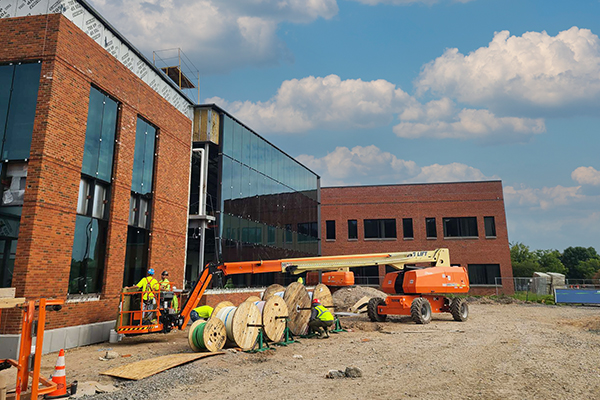
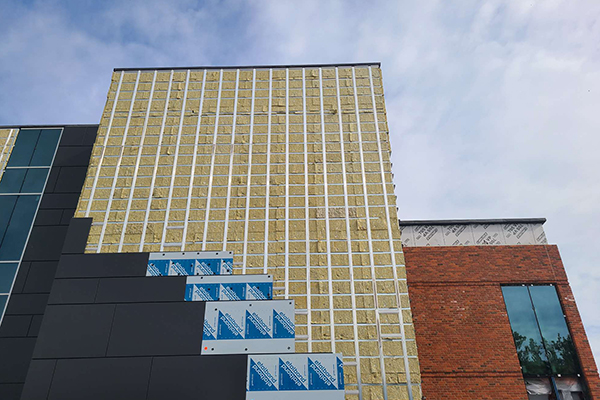
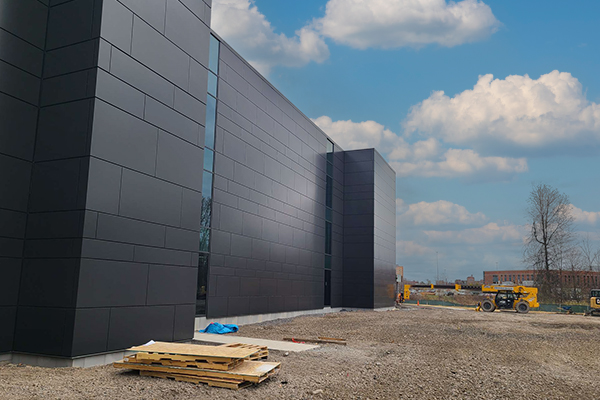
The University of Rochester’s Laboratory for Laser Energetics (LLE) is internationally recognized for its pioneering research in laser science, fusion energy, high-energy-density physics, and advanced materials research. To support continued growth and innovation, the University undertook a $42 million expansion of its LLE campus, adding approximately 66,000 square feet of office, laboratory, and research space.
The three-story addition was designed to accommodate more than 110 scientists, engineers, researchers, and support personnel. Specialized spaces within the expansion include a Class 1000 target fabrication laboratory, thin-film coating laboratory, laser computing facility, wet laboratories, and other advanced research environments requiring stringent indoor environmental quality standards.
Unique Project Challenges
Maintaining exceptional indoor air quality is critical in high-performance research facilities where sensitive equipment, specialized manufacturing processes, and occupant health can be affected by airborne contaminants. The project team sought to achieve compliance with LEED® Version 4 Indoor Environmental Quality requirements while ensuring the new facility provided a safe, healthy, and productive environment for future occupants.
Meeting these objectives required careful oversight throughout construction, verification of indoor air quality management practices, and comprehensive testing prior to occupancy.
Encorus Group Solution
Working as a subconsultant to ME Engineering, Encorus Group provided indoor air quality (IAQ) consulting and testing services throughout the project. Our team reviewed the project’s Construction Indoor Air Quality Management Plan and conducted multiple site observation visits to verify compliance with LEED v4 requirements during construction activities.
Following completion of construction, Encorus developed a comprehensive IAQ Testing Protocol and performed indoor air quality testing to verify that the facility met the performance criteria required for LEED certification. Testing included analysis of formaldehyde, particulate matter, ozone, total volatile organic compounds (TVOCs), carbon monoxide, and other target contaminants commonly associated with new construction.
By validating the effectiveness of construction-phase IAQ controls and documenting compliance with LEED requirements, Encorus helped support the successful delivery of a world-class research environment designed to foster scientific innovation for decades to come.
Specific Project Tasks
- Indoor Air Quality (IAQ) consulting
- Construction IAQ Management Plan review
- LEED® v4 Indoor Environmental Quality compliance support
- Construction-phase site observations
- IAQ testing protocol development
- Formaldehyde testing
- Particulate matter testing
- Ozone testing
- Total Volatile Organic Compound (TVOC) testing
- Carbon monoxide testing
- Final indoor air quality verification and reporting